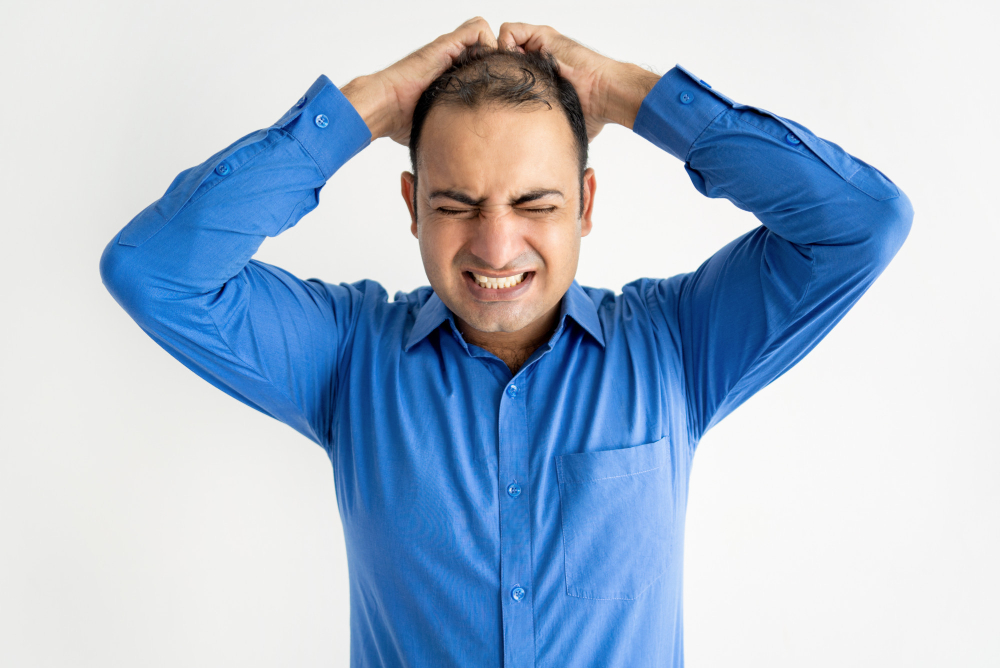
Hair fall—also known as hair loss or alopecia—is the excessive shedding of hair from the scalp or body, beyond the normal 50–100 strands per day. It can be sudden or gradual, temporary or permanent, depending on the underlying cause.
Alopecia refers to any condition that causes hair thinning, bald patches, or complete hair loss. It may affect:
- Only the scalp
- Beard / eyebrows
- Body hair
- Or all hair (rare)
Types of Alopecia
- Androgenetic alopecia – Male & female pattern baldness
- Alopecia areata – Autoimmune patchy hair loss
- Telogen effluvium – Sudden shedding due to stress, illness, or hormones
- Traction alopecia – Due to tight hairstyles
- Scarring alopecia – Due to inflammation damaging follicles
Causes & Risk Factors of Hair Fall
(Reasons for hair fall, sudden hair loss causes, post pregnancy hair fall, thyroid hair fall, PCOS hair loss.)
Hair fall has multiple causes, many of which are reversible with proper treatment.
1. Genetic Causes
- Androgenetic alopecia (male/female pattern hair loss)
- Typically hereditary, progressive, and hormone-linked
2. Hormonal Causes
- Thyroid disorders
- PCOS / PCOD
- Pregnancy & postpartum shedding
- Menopause hair thinning
3. Nutritional Deficiencies
Deficiency of:
- Iron
- Vitamin D
- Zinc
- Vitamin B12
- Protein
- Biotin (if deficient)
4. Stress & Lifestyle
- Sudden emotional shock
- Major illness
- Crash dieting
- Sleep deprivation
- Rapid weight loss
5. Medical Conditions
- Autoimmune disorders (alopecia areata)
- Lupus
- Diabetes
- Fungal infections (ringworm)
6. Medications
- Chemotherapy
- Beta-blockers
- Blood thinners
- Retinoids
- Psychotropic medications
7. Hair Care Practices
- Heat styling
- Chemical treatments
- Tight hairstyles
- Harsh shampoos and dyes
Symptoms & Patterns of Hair Loss
(female pattern hair loss, receding hairline male, round bald patch, hair coming out while shampooing.)
Patients commonly notice:
- Gradual thinning on scalp
- Widening hair part in women
- Receding hairline in men
- Round bald patches
- Hair coming out in clumps
- Scalp itching, flaking, or redness
- Eyebrow or beard hair loss (alopecia areata)
Diagnosis: Tests for Hair Fall
(hair fall test, blood tests for hair loss, trichologist diagnosis, scalp biopsy for alopecia)
A dermatologist or trichologist may perform:
1. Medical History
Covers:
- Menstrual irregularities
- Family history
- Recent illness or stress
- Diet & lifestyle
- Medications
2. Scalp Examination
Checks for:
- Irritation
- Scaling
- Bald patches
- Follicle health
- Hair shaft abnormalities
3. Diagnostic Tests
- Blood tests: thyroid, iron, B12, vitamin D, zinc, hormone levels
- Pull test: checking active shedding
- Dermoscopy: detailed scalp mapping
- Biopsy: only when scarring alopecia is suspected
Treatment Options for Hair Loss
Surecare Homeopathic Treatment for Hair Fall (Holistic & Individualized)
(Homeopathic treatment for hair loss, homeopathic hair regrowth serum, homeopathy for alopecia areata, natural treatment for hair fall.)
Surecare Homeopathy views hair fall as a reflection of internal imbalance—constitutional, hormonal, emotional, or nutritional. Treatment is personalized, not one-size-fits-all.
Our Doctor consider:
- Type of hair fall (patchy, diffuse, patterned)
- Emotional stress
- Hormonal issues (PCOS, thyroid)
- Dandruff, itching, scalp infections
- Family history
- Sleep quality
- Digestion and menstrual history
Reported benefits of individualized homeopathy:
- Reduced shedding
- Better scalp health
- Emotional stability
- Supportive improvement in alopecia areata
- Long-term hair strengthening
Homeopathic Hair Serums
Many clinics prescribe topical homeopathic serums like TRICOSURE https://surecareproducts.com/ These serums aim to boost scalp circulation and strengthen follicles.
Home Remedies & Lifestyle Tips to Reduce Hair Fall
(home remedies for hair fall, how to stop hair fall naturally, onion juice for hair growth, best oil for hair fall.)
Helpful supportive measures include:
- Warm oil massage (coconut, almond, castor)
- Avoiding heat styling & tight hairstyles
- Using mild, sulfate-free shampoos
- Stress management: Yoga, meditation
- Adequate sleep
- Hydration (2–3 liters/day)
Popular but optional remedies:
- Aloe vera gel
- Onion juice (mixed results)
- Methi (fenugreek) paste
- Amla oil
Diet for Hair Growth & Healthy Scalp
(diet for hair growth, foods to stop hair fall, what to eat for thicker hair.)
A nutrient-rich diet helps prevent and treat hair loss.
1. Protein-Rich Foods
- Eggs
- Chicken & fish
- Paneer / tofu
- Lentils, beans
- Nuts & seeds
2. Iron-Rich Foods
- Spinach
- Beetroot
- Red meat
- Lentils
3. Zinc & Biotin Sources
- Pumpkin seeds
- Almonds
- Eggs
- Whole grains
4. Vitamin D & E
- Sun exposure
- Mushrooms
- Fortified foods
- Nuts & seeds
5. Omega-3 Foods
Avoid Excess:
- Sugary snacks
- Deep-fried foods
- Excess caffeine
- Very restrictive diets
How to Prevent Hair Fall
(how to prevent hair fall, best shampoo for hair fall control, daily hair care routine.)
- Maintain a healthy diet
- Sleep 7–8 hours daily
- Avoid crash dieting
- Reduce stress
- Avoid harsh chemicals & frequent heat styling
- Keep scalp clean and hydrated
- Use protective hairstyles
- Treat dandruff early
Conclusion
Hair fall is common, but most types are treatable when diagnosed early. A combination of:
- Medical evaluation
- Nutritional correction
- Gentle hair care
- Stress management
- Homeopathy for internal balance
- And supportive serums
can significantly help reduce shedding and encourage healthy regrowth.