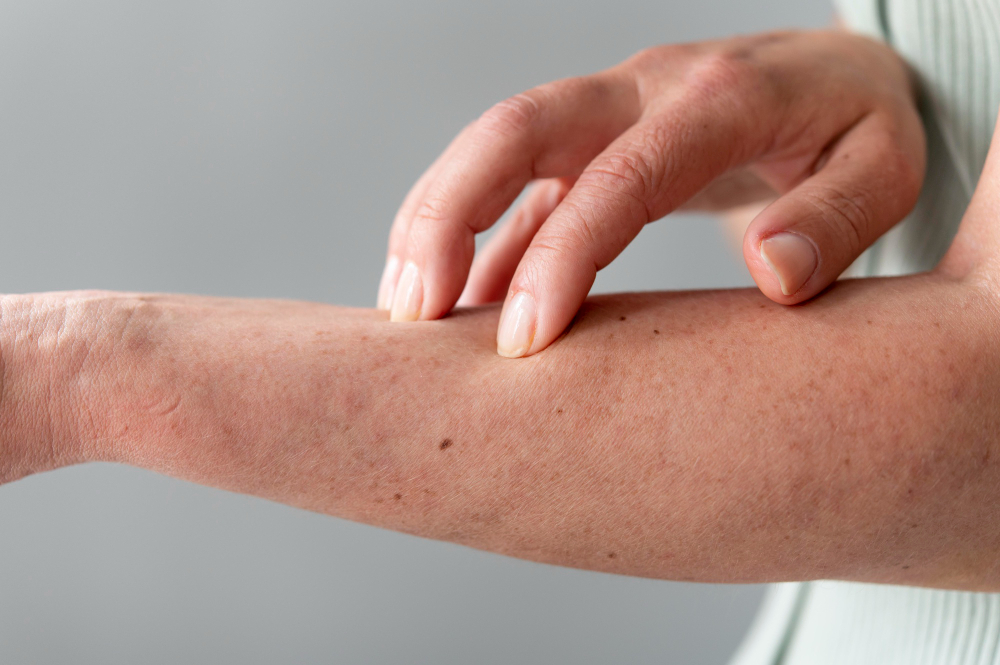
Urticaria, commonly called hives, is a skin condition marked by itchy, raised, red or skin-coloured welts that often appear suddenly and can fade within hours. These welts are triggered by the rapid release of histamine and other chemicals from mast cells in the skin.
- Acute urticaria: Lasts less than six weeks.
- Chronic urticaria: Persists for six weeks or more.
Some people experience deeper swelling called angioedema, which may affect the lips, eyelids, or extremities.
How Common Is Urticaria?
- About 20% of people experience urticaria at some point in their lives, making it a relatively common skin disorder.
What Causes Urticaria
Urticaria results from complex immune responses, especially mast cell activation. Common causes and risk factors include:
- Mast cell activation: Main driver releasing histamine.
- Autoimmune mechanisms: Chronic spontaneous urticaria is often linked to autoantibodies against IgE or its receptor.
Triggers:
- Infections (viral or bacterial)
- Thyroid disorders
- Stress and anxiety
- NSAID medications (such as aspirin)
- Foods or additives (pseudoallergens)
- Physical factors (pressure, heat, cold, vibration)
- Idiopathic: Many chronic cases remain unexplained.
How Is Urticaria Diagnosed?
Diagnosis is largely clinical, based on:
- Medical history: Onset, frequency, duration, and possible triggers.
- Physical examination: Presence of welts and any angioedema.
- Lab tests: Only when needed to rule out underlying causes.
- Referral: Severe, atypical, or resistant cases may require a dermatologist or allergy specialist.
Types of Urticaria
Duration-based
1. Acute Urticaria
- Triggers: Infections, foods (nuts, shellfish, eggs, milk), medications, insect bites
- Sudden onset, usually resolves when the trigger is removed.
2. Chronic Urticaria
- Lasts beyond six weeks; can be:
- Chronic Spontaneous Urticaria (CSU): No obvious trigger.
- Chronic Inducible Urticaria (CIndU): Triggered by physical/environmental factors.
Trigger-based (Chronic Inducible Urticaria)
- Dermatographism: Hives appear when skin is scratched.
- Cold urticaria: Triggered by cold exposure.
- Heat urticaria: Triggered by heat, hot showers, or exercise.
- Cholinergic urticaria: Provoked by sweating, exercise, hot environments, or stress.
- Pressure urticaria: Follows sustained pressure (tight clothing, straps).
- Solar urticaria: Triggered by sunlight or artificial light.
- Aquagenic urticaria: Rare, triggered by contact with water.
- Vibratory urticaria: Triggered by vibration.
Swelling / Edema Forms
- Urticaria with angioedema: Deeper swelling (lips, eyelids, hands, feet, genital area).
- Hereditary angioedema (HAE): Due to C1-esterase inhibitor deficiency, swelling without hives or itching.
Special Clinical Types
- Autoimmune urticaria: Linked to underlying autoimmunity (e.g., thyroid).
- Contact urticaria: Triggered by direct contact (latex, chemicals, plants, cosmetics).
Homeopathy for Urticaria at Surecare Homeopathy
At Surecare Homeopathy, led by Dr. Rajashekar Bogadi, urticaria is managed holistically and individually, focusing on:
- Thorough Case Assessment: Detailed review of physical, emotional, lifestyle, and trigger factors.
- Trigger Identification & Elimination: Emphasis on detecting and avoiding personal triggers.
- Tailored Remedy Selection: Based on unique symptoms—aiming to stabilize mast cells, control itching, and address emotional stressors.
- Long-term Relief & Prevention: Use of constitutional remedies to prevent recurrence; regular monitoring and remedy adjustments.
- Integrated Care Approach:
- Homeopathy complements conventional treatments.
- Collaboration with dermatologists/allergists when needed.
- Symptom tracking (e.g., wheal diaries) to monitor progress.
Benefits of Homeopathy in Urticaria
- Gentle & Safe: Minimal side effects
- Holistic: Addresses root causes—physical and emotional
- Long-lasting results: Reduces recurrence and severity
- Supports other therapies: Works alongside conventional medicine
Practical Tips for Managing Urticaria
- Keep a health diary to track triggers (foods, stress, weather).
- Use cool compresses for acute itching.
- Avoid tight clothing and known triggers (pressure, heat, cold).
- Stay consistent with treatment and attend follow-up visits.
- Collaborate with both homeopaths and dermatologist/allergist for best outcomes.