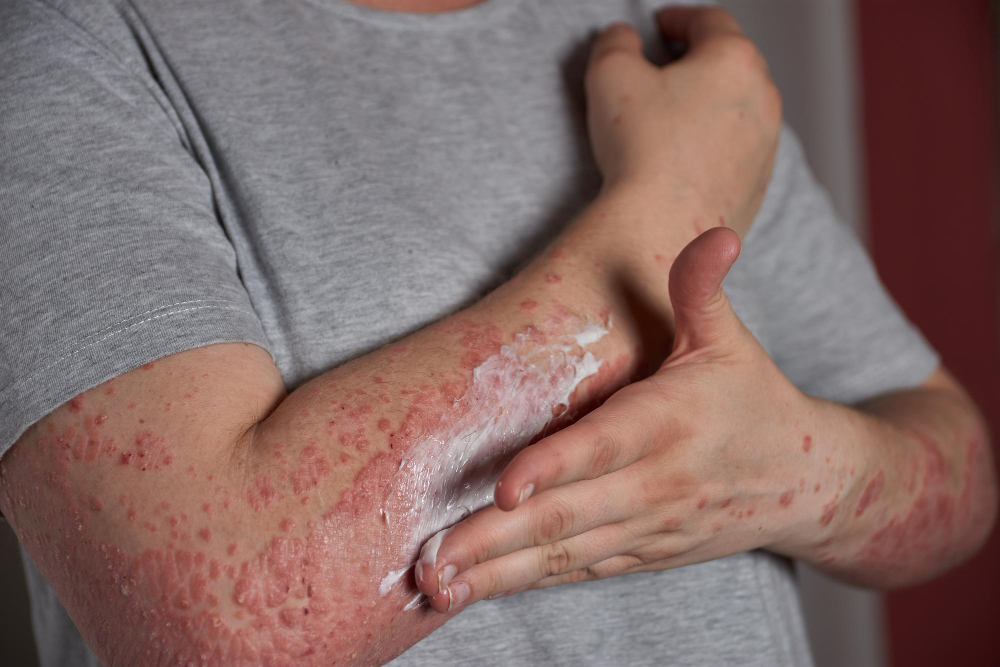
Psoriasis is a chronic, immune-mediated skin condition that causes red, scaly, itchy patches on the skin. It is not contagious and can affect people of any age, although it most commonly begins between 15–35 years. Worldwide dermatology research—including data from the :contentReference[oaicite:0]{index=0} (WHO) and major dermatology associations—shows that psoriasis affects 2–3% of the global population, making it one of the most common chronic skin disorders.
What Is Psoriasis?
Psoriasis occurs when the body’s immune system becomes overactive, causing skin cells to grow much faster than normal. Instead of shedding naturally, the cells build up on the skin’s surface, forming:
- Red, inflamed patches
- Thick, silvery-white scales
- Itching, burning, or soreness
Because it is long-term and relapsing in nature, psoriasis requires continuous management and a holistic treatment approach.
How Common Is Psoriasis? (According to Global Research)
- WHO estimates that 125 million people worldwide are affected by psoriasis.
- The prevalence ranges from 0.09% to 11.4% depending on region and ethnicity.
- Studies show psoriasis has significant impact on:
- Quality of life
- Emotional well-being
- Sleep
- Productivity
- Around one-third of individuals with psoriasis may develop psoriatic arthritis, a painful joint condition.
What Causes Psoriasis?
Psoriasis is complex and results from a combination of:
1. Immune System Dysfunction
Psoriasis is primarily an autoimmune disorder. The immune system mistakenly attacks healthy skin cells, speeding up the growth cycle.
2. Genetics
People with a family history of psoriasis are more likely to develop it. Several genes related to immune function (like HLA-Cw6) are linked to psoriasis.
3. Environmental Triggers
Common triggers include:
- Stress
- Skin injury (Koebner phenomenon)
- Infections (especially streptococcal throat infection)
- Smoking and alcohol
- Cold, dry climates
- Certain medications (beta-blockers, NSAIDs, lithium)
Symptoms of Psoriasis
Symptoms vary by type, but the most common include:
- Red, inflamed patches of skin
- Thick, silvery or white scaling
- Itching or burning sensation
- Cracked, dry skin that may bleed
- Nail changes (pitting, discoloration, cracking)
- Joint pain or stiffness (psoriatic arthritis)
Types of Psoriasis
Psoriasis is not a single disease—there are multiple clinically recognized types, each with different behaviour, triggers, and appearance.
1. Plaque Psoriasis (Psoriasis Vulgaris)
Most common type – 80–90% of cases.
Features:
- Raised, red patches with silvery scales
- Itching, burning, and soreness
- Common sites: elbows, knees, scalp, lower back
2. Guttate Psoriasis
Often triggered by bacterial infections like strep throat.
Features:
- Small, drop-shaped red lesions
- Common in children and young adults
- May appear suddenly and spread quickly
3. Inverse (Flexural) Psoriasis
Affects skin folds.
Features:
- Smooth, shiny red patches
- Found in armpits, groin, under breasts
- Worsens with sweating or friction
4. Pustular Psoriasis
Characterized by pus-filled white bumps (sterile pustules).
Types:
- Generalized Pustular Psoriasis (GPP) – medical emergency
- Palmoplantar pustulosis – palms and soles
- Acrodermatitis continua – fingers and toes
5. Erythrodermic Psoriasis
A severe, rare, and potentially life-threatening type.
Features:
- Redness covering nearly the entire body
- Severe itching, burning
- Risk of dehydration, infection, temperature imbalance
Requires immediate medical care.
6. Nail Psoriasis
Affects fingernails and toenails.
Features:
- Pitting
- Ridging
- Discoloration
- Thickened or crumbling nails
- Can be confused with fungal infection
7. Scalp Psoriasis
Affects 45–56% of people with psoriasis.
Features:
- Red patches with thick scales
- Dandruff-like flaking
- Itching and hair shedding (temporary)
8. Psoriatic Arthritis (PsA)
A chronic inflammatory arthritis associated with psoriasis.
Features:
- Joint pain and swelling
- Morning stiffness
- Nail changes
- Can lead to permanent joint damage if untreated
Diagnosis of Psoriasis
A dermatologist may diagnose psoriasis based on:
- Skin examination
- Medical history
- Family history
- Nail and scalp evaluation
- Skin biopsy (rarely needed)
Surecare Homeopathic Treatment for Psoriasis
A Holistic, Root-Cause Approach by Dr. Rajashekar Bogadi
Homeopathy treats psoriasis by understanding the deep-rooted immune imbalance, patient constitution, emotional triggers, and environmental factors. The focus is not only on the skin but the whole body-mind system.
How Homeopathy Helps:
- Individualized remedies based on physical and emotional symptoms
- Strengthens immunity and regulates inflammatory pathways
- Reduces scaling, itching, and frequency of flare-ups
- Prevents progression to psoriatic arthritis
- Addresses stress, a major trigger
- Safe for long-term use with no side effects
- Restores skin from within, not by suppressing symptoms
Homeopathy aims for long-term remission, not just temporary relief.
Living With Psoriasis: Practical Tips
- Moisturize daily
- Avoid harsh soaps and strong detergents
- Reduce stress through meditation or yoga
- Avoid smoking and excessive alcohol
- Get sunlight in moderation
- Maintain a healthy weight
- Follow prescribed homeopathic treatment consistently
Final Thoughts
Psoriasis is a chronic inflammatory condition—but with the right holistic treatment, lifestyle modifications, and early intervention, patients can achieve long-lasting control and significantly improved quality of life.